
Platformer Games Online – Play Free
8 games
Jump, run and time your moves in free platformer games online. Cross obstacles, collect items and reach new areas in classic and modern browser platform games.



About Platformer Games
Platformer online games are built around movement through a level. Precision platformers demand exact jumps and timing, while adventure platformers mix movement with exploration or puzzles. Short levels make the genre easy to replay when you want to improve a route or score.
Playing on different devices
Keyboard controls are common for running and jumping, although many simple platform games also offer touch buttons for phones and tablets.
Platformer Games: a practical browser-game guide
Platformer games are built around movement through spaces where timing, jumping, momentum and obstacle reading matter. The classic version uses a character running and jumping across platforms, but browser platformers now include gravity changes, wall movement, physics tools and precision challenges that stretch the category far beyond one jump button.
Precision platformers
Precision platformers use small safe areas, spikes, moving hazards and tight timing. Success comes from repeating a short sequence until the movement becomes consistent. Move deliberately. Pressing jump too early can be as damaging as pressing it too late, and unnecessary direction changes in the air can turn a stable landing into a miss.
Games such as OvO-style obstacle courses reward learning movement combinations rather than simply reaching the right side of the screen.
Physics and unusual movement
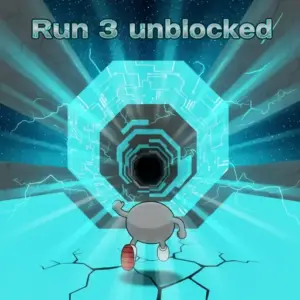
Some platformers replace normal walking and jumping with a physics tool. Stickman Climb 2 uses a pickaxe-driven movement system, while Run 3 changes gravity when the character moves onto different tunnel surfaces. These games are still platformers because the challenge is navigating space, but the skill is understanding a movement rule rather than memorizing one standard control scheme.
Read the specific controls before assuming Space is always jump.
Checkpoints and repetition
Checkpoints change how you should practice. Once a difficult section is secured, use the next attempts to learn what follows rather than rushing because you are afraid of losing earlier progress. If a game has instant restart and short levels, restarting quickly can be efficient when the opening is already poor.
For longer levels, finishing a rough attempt can teach the later route even when the score will not be competitive.
Momentum and route planning
Good platform movement starts before the jump. The speed and direction you carry into an obstacle influence what happens in the air. Look at the landing point, not only the gap. When several hazards appear close together, plan the sequence so one landing sets up the next movement instead of leaving the character facing the wrong way.
Choosing a platformer game
Choose a platformer by movement style: classic jumping, parkour, gravity, physics climbing, speedrunning or local two-player racing. The individual game guide should explain the real control scheme and mechanics.
Playing on desktop, Chromebook and mobile
Keyboard is common for precision platformers because repeated timing is easy with physical keys. Touch can work when the game has dedicated mobile controls, but a small screen can make narrow platforms harder to read. Physics games may feel different between touch and keyboard even when both are supported.
Break difficult sections into inputs
When a platform sequence feels impossible, describe it as a short chain: move to edge, jump late, release direction, land, then jump again. Practise the chain rather than the whole level. If the game has a checkpoint nearby, use it as a laboratory for that one section. This reduces frustration because each attempt has a clear purpose. Once the sequence becomes consistent, connect it back into the full run.
Learn what can be changed in the air
Different platformers give different amounts of air control. Some let you reverse direction strongly after jumping; others commit most of the trajectory at takeoff. Test this in a safe area. Understanding air control changes where you should jump and how aggressively you approach a gap. Physics platformers may replace normal air control entirely with tools, rotation or gravity mechanics, making the game-specific control guide especially important.
Speedrunning and safe completion are different goals
The fastest route often uses risks that are unnecessary for a first completion. Learn a stable route before cutting corners. Once you can reach the finish consistently, identify where time is actually being lost and experiment there. This approach produces more useful practice than trying every difficult skip immediately. Games with instant restart make aggressive experimentation easy, but a stable baseline tells you whether the risky route is truly faster overall.
Use visual rhythm to anticipate hazards
Moving platforms, lasers, crushers and rotating obstacles often repeat a cycle. Watch one full cycle before committing when the game gives you a safe position. The goal is to enter the pattern at a moment that creates several safe actions in sequence, not just to survive the first obstacle. This kind of rhythm reading is especially valuable in precision platformers where the space between hazards is too small for late reactions.
Checkpoints change how frustration should be managed
A difficult platformer can produce many failures in a few minutes. Checkpoints are the game’s way of limiting how much progress each failure removes. Use them psychologically as well as mechanically. Once a checkpoint is reached, treat the previous section as solved for now and focus on the next problem. If frustration causes inputs to become faster and less deliberate, take a short break. Precision improves when the player can still see the sequence clearly instead of reacting angrily to the last miss.
Choosing between keyboard and touch
A platformer can technically support touch and still feel easier on physical keys. Keyboard buttons give consistent travel and clear simultaneous inputs, which helps with precise movement. Touch interfaces can be excellent when designed with large directional areas and a responsive jump button, but small screens reduce visual space around hazards. Test both when available. The better device is the one that gives you predictable input and enough screen area to read the next platform.
Why platformer controls should be documented per game
Small control differences completely change a platformer. One title may allow double jumps, another may use wall running, and another may have no jump button because movement comes from a pickaxe or gravity rotation. A generic “use arrows and Space” instruction can therefore mislead players and damage trust. GameBosh should document verified controls on priority game pages and use the category guide only for broad movement concepts. The individual game’s own prompts remain the final reference when a version or embedded build changes.
GameBosh category guide reviewed August 2026. Individual games can use different controls, technologies and device support.
Platformer Games FAQ
What is a platformer game?
A platformer is a game where movement, jumping and navigating platforms or obstacles are central to progress.
Are platformer games good for quick play?
Yes. Many use short stages and quick restarts, which makes them convenient for short sessions.
Can platform games work on mobile?
Some can. Touch controls need to be supported by the individual game, and precise platforming may feel easier with physical keys.